
When Your Team Gives You a Shock Collar ⚡️🤐
case acceptance listening open ended questions patient communication personal growth Apr 08, 2026
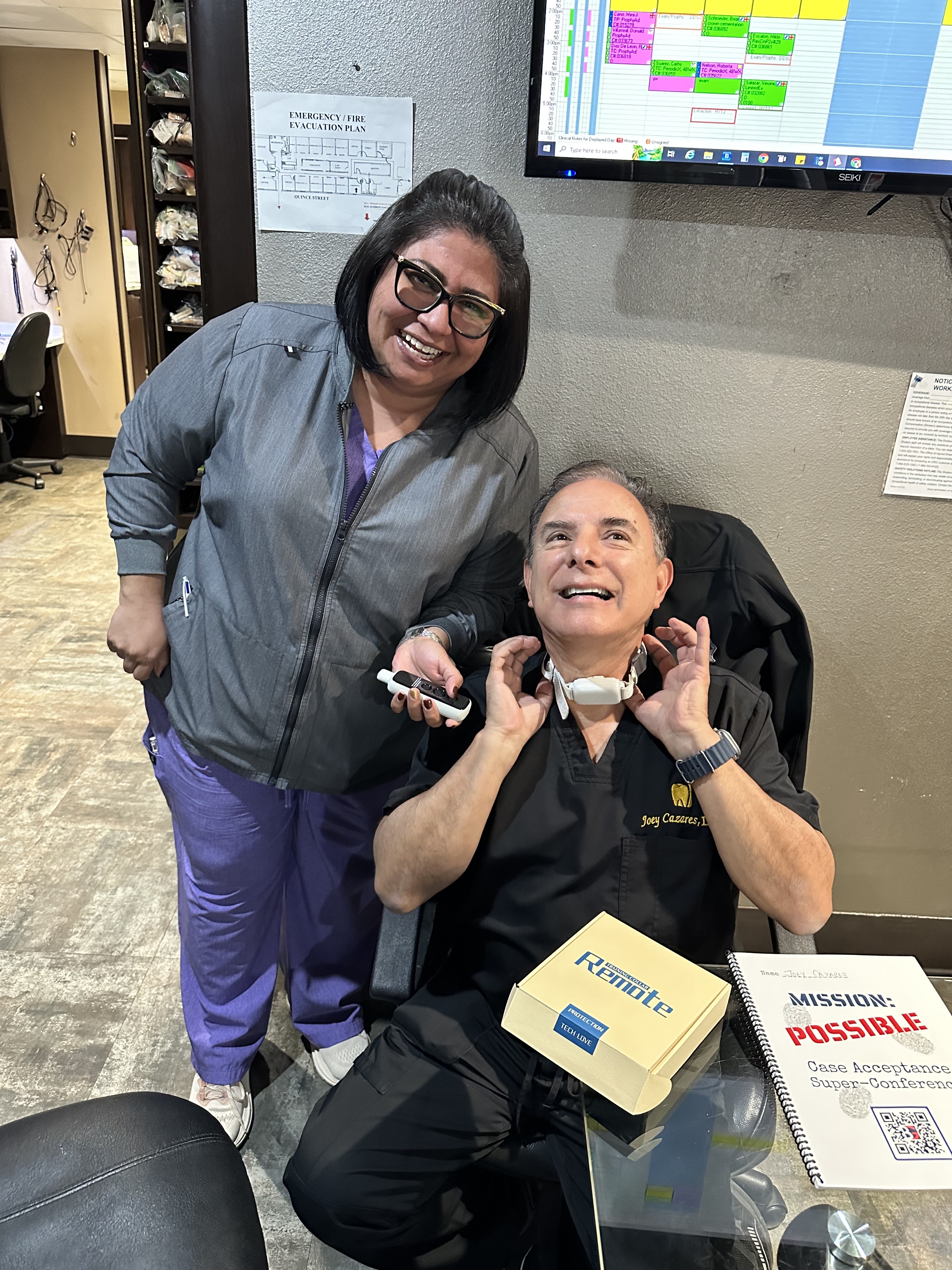 Every once in a while, a team does something that’s funny… and also painfully accurate for so many of us 👀
This was one of those times.
Fresh from Mission Possible where those in attendance were reminded of the value of listening well, they had an idea... Dr. Joey Cazares was a great sport when his team gifted him a shock collar. ⚡️🤐
Not in a serious way—but also not entirely joking.
The message was simple:
Stop talking. Start listening.
And honestly? It wasn’t wrong.
Here’s the thing most people miss
We talk a lot in dentistry.
We explain. We educate. We diagnose. We fix.
None of that is bad. But a lot of it happens too soon.
Patients don’t need more information right away.
They need to feel understood first.
And that only happens if we actually let them talk.
But let’s be real… patients won’t just magically open up
If you want something to listen to, you have to create it.
That starts with better questions.
Not:
- “Does that make sense?”
- “Are you in pain?”
- “Do you have any questions?”
Those shut conversations down.
Try these instead:
- “What’s most important for you to accomplish today?”
- “How important is prevention to you?”
- “What would you like your teeth to be like in 10-12 years?”
- “If I see some things that will get in the way of the goals you mentioned, how soon would like to address those things?”
Open-ended questions invite patients to share more than symptoms—
they share context, emotion, and motivation.
And that’s the information that actually matters. Now you’re getting somewhere. Now you have something to listen to!
Where things go sideways
Most dentists and team members aren’t bad at communication. They’re just quick.
They hear a few words and jump to the solution.
They interrupt without realizing it.
They fill silence because it feels uncomfortable.
And in doing that, they miss the actual point.
Patients don’t feel heard when we’re already moving on.
What patients actually need
They need space.
They need a few extra seconds to finish their thought.
They need to know you’re not rushing them.
They need to feel like what they’re saying matters.
When that happens, everything changes.
They relax.
They trust you faster.
They’re more open to moving forward.
Not because you explained it better—
but because they felt understood!
A few small shifts that make a big difference
- Ask a question… then stop talking
- Let them finish, even if you think you know where they’re going
- Repeat back what you heard (“So what I’m hearing is…”)
- Slow your pace more than feels natural
- Pay attention to your body language and non-verbal cues—patients notice it all
The point
No, I’m not suggesting you order shock collars for your team.🤔
But the idea behind it? Worth paying attention to.
Talk less.
Ask better questions.
Listen longer than you think you should.
Because patients don’t move forward when they feel informed.
They move forward when they feel understood.
Categories
All Topics accountability cancellations and no shows case acceptance change christmas culture delegation dental front office systems emergency end of year insurance events failure fee shoppers fees financial arrangements front desk goals and planning gratitude growth mindset hygiene insurance leadership limited exam listening marketing martin luther king jr new patients objections open ended questions out of network patient communication patient experience personal growth phone skills planning appointment ppo's profitable scheduling stress systems team building team communication team culture team training teamwork thanksgiving time management unscheduled treatment vision work smarter